

A home addition is more than just added square footage. It's an opportunity to enhance your home's functionality, beauty, and character. But a poorly designed addition can look awkward, hurt your home's curb appeal, and fail to deliver the quality of life improvements you're seeking.
This guide walks you through the design principles that make home additions work: matching architectural style, understanding proportion, choosing materials, planning the connection to existing spaces, and thinking about how your addition will look from the street. Whether you're adding a bedroom, expanding your kitchen, or building a sunroom, these design fundamentals apply.
Principle 1: Match Your Architectural Style
Albany has remarkable architectural diversity. You might live in a Victorian, a Colonial Revival, a mid-century ranch, a farmhouse, a brownstone, or a contemporary home. Whatever your home's style, your addition should echo and respect that style.
For a Victorian home, think pitched roofs, detailed trim, bay windows, and period-appropriate materials. For a ranch, think low-pitched roofs, clean lines, and horizontal emphasis. For a farmhouse, think gabled roofs, board-and-batten siding, and rustic details. An addition that clashes stylistically will always look tacked-on and hurt resale value.
The good news is that Mastaba's designers understand the distinctive architectural character of the Capital Region. We've designed additions for Colonial homes in Delmar, Victorians in Center Square, farmhouses in Clifton Park, and ranches in Saratoga Springs. We know how to make an addition look like it was always meant to be part of your home.
Principle 2: Understand Proportion and Scale
An addition that's too large for your home will overwhelm the original structure. An addition that's too small might look like an afterthought. Good proportion means the addition feels appropriately scaled to the existing home, neither dominating nor disappearing.
A useful rule: an addition's footprint should typically be 20 to 35% of the existing home's footprint. A 2,000-square-foot home can accommodate a 400 to 700-square-foot addition without looking imbalanced. Smaller additions (200 to 300 sq ft) work best at the side or rear of the home, integrated seamlessly. Larger additions may require careful placement to avoid overwhelming the original structure.
Pay attention to roof lines. A pitched roof addition should match the pitch and overhang of your existing roof. Misaligned roof lines are one of the most common design mistakes and immediately signal that the addition is newer and separate.
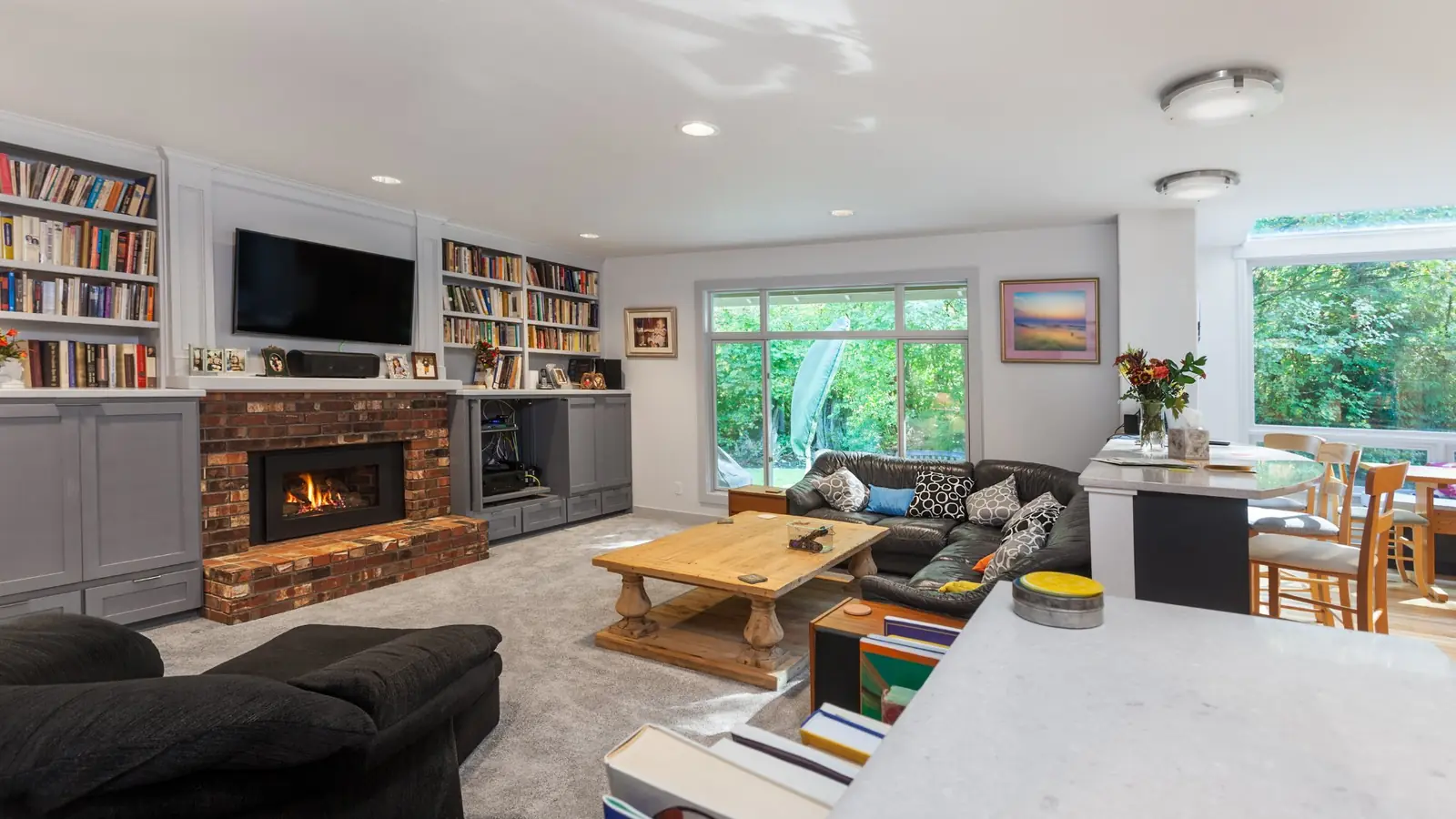
Thoughtful design creates visual continuity and timeless appeal
Principle 3: Use Compatible Materials and Colors
Material consistency is critical. If your home is brick, your addition should match that brick as closely as possible. If it's vinyl siding, match the color and profile. If it's wood, match the siding material. Using completely different materials will make the addition stand out as obviously newer.
This extends to trim, window style, and details. Match the window style, frame color, and trim proportions of your existing windows. Roofing should match in style and color. Gutters, downspouts, and exterior hardware should be consistent.
The goal is to make your addition look like an integral part of your home, not an obviously newer structure bolted on the side. When visitors look at your home from the street, the addition should feel timeless and intentional.
Principle 4: Plan Your Site Location Carefully
Where you place an addition matters as much as how you design it. Consider natural light, sun exposure, views from your property, and how the addition will look from the street. A rear addition is often less visible and less disruptive than a front addition. A side addition should integrate with the home's form rather than jutting out awkwardly.
Evaluate privacy. A bedroom addition should have good window placement for privacy while maximizing light. A mudroom or utility addition might tolerate less natural light. A sunroom should maximize south and west exposure for warmth and views.
Lot lines, setbacks, and zoning regulations matter too. In Albany, different neighborhoods have different setback requirements (how far from the property line a structure must be). Your contractor should verify these before design begins.
Let Mastaba Design Your Addition
Our team has designed and built 200+ additions in the Capital Region. We understand how to create additions that honor your home's character while delivering the function and beauty you want. Call for a design consultation.
Call (518) 308-6427 →Principle 5: Design Thoughtful Connections to Existing Spaces
An addition should connect naturally to your existing home, not feel isolated. Think about how you'll transition from the existing home into the new space. Is there a logical hallway or doorway? Does the flooring flow naturally? Can utilities be run efficiently?
The best additions extend living flow. A bedroom addition should have a clear hallway connection. A kitchen addition should integrate the new space with dining areas. A family room addition should open to living spaces. Poor connections, long hallways, awkward doorways, dead ends, make additions feel tacked on and reduce their utility.
Principle 6: Consider Energy Efficiency and Climate
Albany winters are cold and snow is common. Your addition should be designed with energy efficiency in mind. High-performance windows with low U-values, proper insulation in walls and roofs, air sealing, and efficient HVAC design minimize heating costs and maximize comfort.
A sunroom, for example, should have operable windows and shades to manage summer heat gain. A bedroom addition should have insulation and climate control independent of the main system if possible. Think about how the addition will perform year-round, not just on design days.
Avoiding Common Design Mistakes
We've seen additions that broke every rule in this guide. Here are the mistakes to avoid:
- Mismatched roof lines, A flat-roof addition on a pitched-roof home looks awkward and unintentional
- Wrong materials, Vinyl siding on a brick home, or new brick that doesn't match the original
- Poor proportion, An addition that overwhelms the original home or looks too small
- Inadequate windows, An addition that's dark and gloomy because windows weren't prioritized
- Difficult connections, Long hallways or awkward doorways to reach the new space
- Not considering curb appeal, An addition that dominates the front of your home and harms its appearance
- Ignoring site conditions, Building in a location prone to flooding, poor drainage, or inadequate sunlight
Related Articles
Frequently Asked Questions
How do I design a home addition that matches my existing home?
Match the architectural style, materials, roof line, and color palette of your existing home. For example, if your home is a Victorian, the addition should echo Victorian details. If it's a ranch, the addition should have a low-pitched roof and horizontal lines. Consistency in materials and finishes creates visual continuity.
What is the best location for a home addition?
The best location depends on your lot layout, sun exposure, views, and how you'll use the addition. Consider privacy, natural light, connection to existing spaces, and how the addition will look from the street. Most additions work best where they extend naturally from the existing home without disrupting the overall form.
Do I need an architect for a home addition?
For simple single-room additions, a good builder with design experience may suffice. For complex additions, second stories, or additions requiring structural engineering, hiring an architect ensures the design is sound, code-compliant, and optimized for your needs.
What design mistakes should I avoid in a home addition?
Common mistakes include: mismatched architectural styles, poor proportion (an addition that dwarfs or looks too small for the home), misaligned roof lines, incompatible materials, insufficient natural light, poor connection to existing spaces, and not considering how the addition looks from the street.
Should a home addition match the exterior style of my home?
Yes, matching the architectural style is important for visual continuity and resale appeal. An addition that clashes stylistically with your home will look tacked-on and reduce curb appeal. Work with an architect or experienced contractor to ensure the addition complements your home's character.
How do I connect a new addition to my existing HVAC and utilities?
Your contractor will evaluate your existing HVAC, electrical, and plumbing systems to determine if they can be extended into the addition or if upgrades are needed. Modern additions typically require dedicated circuits, proper ductwork, and in-line plumbing. Mastaba designs utilities to ensure the addition is comfortable and energy-efficient.