
Your home feels crowded. You need more space, a home office, an extra bedroom, a sunroom. You could move to a larger home, but that means selling, buying, and dealing with market timing. Or you could add a room to your existing home, keeping the neighborhood you love while gaining the space you need.
This guide covers everything you need to know about planning and building a room addition in Albany, Clifton Park, Troy, Saratoga Springs, and the Capital Region: realistic costs, the permit process, timeline expectations, and how to work with a contractor to ensure your addition is structurally sound, aesthetically pleasing, and adds real value to your home.
Room Addition Costs in Albany
Room addition costs vary based on size, foundation type, finishes, and complexity. A general rule of thumb is $150 to $250 per square foot for a finished room addition. Here's what that means:
Small Addition (10 x 12 feet = 120 square feet)
A small bedroom or office addition costs $18,000 to $30,000. This typically includes slab or foundation, framing, roofing, basic drywall finishes, electrical, and basic fixtures. Timeline: 8 to 12 weeks.
Medium Addition (14 x 16 feet = 224 square feet)
A mid-size master suite, office, or family room addition costs $33,600 to $56,000. This includes a more substantial foundation, full systems (electrical, plumbing, HVAC), better finishes, and potentially custom features like built-ins or skylights. Timeline: 10 to 14 weeks.
Larger Addition (16 x 20 feet = 320 square feet)
A larger suite, expanded family room, or multi-room addition costs $48,000 to $80,000. Includes comprehensive systems, premium finishes, and potential structural complexity. Timeline: 14 to 18 weeks.
The Room Addition Process
Phase 1: Planning and Design (1 to 2 weeks)
Start by defining your needs: What will the room be used for? What size? Where on your property? You'll work with a designer or architect to develop plans. These plans show the location, size, foundation type, how it connects to the existing home, and how utilities (electrical, plumbing, HVAC) will be extended.
Phase 2: Site Assessment and Permits (2 to 4 weeks)
Before construction, assess your site: Is there adequate space? Are there utility lines underground? Is drainage adequate? A professional site survey identifies potential issues. Your contractor submits plans to the local building department for permits. This typically takes 2 to 4 weeks depending on the municipality.
Phase 3: Foundation Work (2 to 4 weeks)
The foundation is critical. Options include slab-on-grade (concrete slab directly on soil, cost-effective but can be affected by freezing/thawing in upstate NY), stem wall with frost-protected base (a concrete perimeter extending below frost line, better for cold climates), or matching your existing foundation type (if adding to a basement or crawlspace home).
Phase 4: Framing and Exterior (3 to 4 weeks)
Once the foundation is set, the wooden frame of the addition is built. Walls, roof, windows, and doors go up. The exterior is weather-sealed with sheathing and roofing material. Your contractor connects the addition's roof to the existing home's roof, this interface is critical for weatherproofing.
Phase 5: Rough Systems (3 to 4 weeks)
Electrical wiring, plumbing lines, and HVAC ducts are installed before drywall goes up. These "rough-in" systems are inspected by the building inspector to ensure code compliance.
Phase 6: Drywall, Finishes, and Fixtures (4 to 6 weeks)
Drywall is hung, taped, and finished. Paint, flooring, trim, lighting fixtures, and final fixtures are installed. Interior doors, closet rods, and finishing details complete the room.
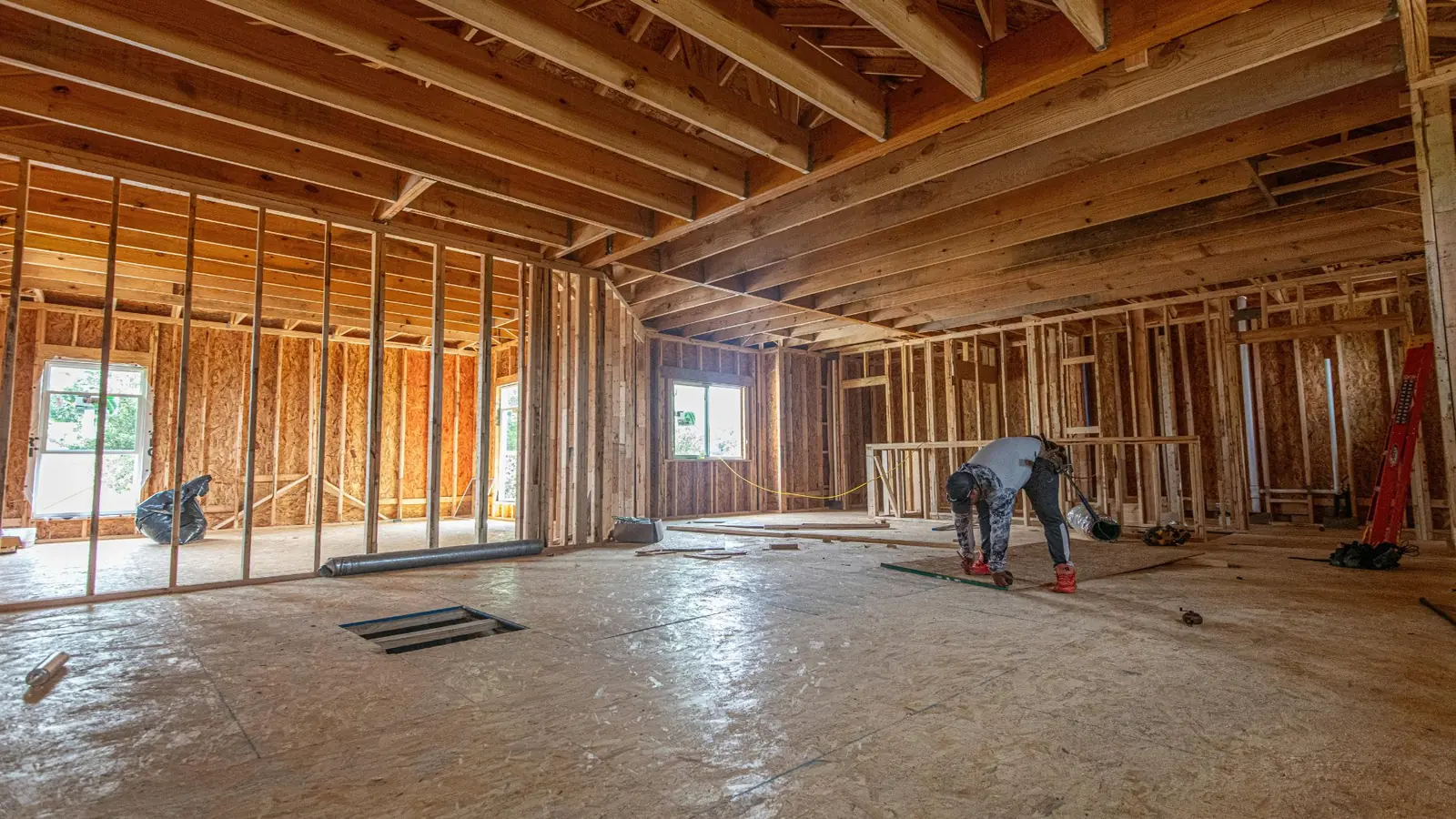
Professional framing and structural work ensures lasting quality
Plan Your Room Addition with Mastaba
Mastaba Renovations handles room additions from design through final inspection. Call for a free site assessment and planning consultation. We'll evaluate your property, discuss options, and provide a detailed estimate.
Call (518) 308-6427 →Connecting Utilities to Your Addition
Every addition needs electrical power and HVAC (heating/cooling). If it includes a bathroom or kitchen, plumbing is required. Your existing systems must have capacity to serve the new space.
Electrical
New circuits must be run from your electrical panel. If your panel is at capacity, an upgrade may be necessary ($3,000 to $6,000). Calculate power requirements for the addition's intended use (office, bedroom, bathroom, kitchen).
HVAC
Your furnace and air conditioning must have capacity to heat/cool the addition. For a small addition, extending existing ducts may work. For a larger addition or if capacity is inadequate, a new mini-split heat pump (ductless system) is often the cleanest solution.
Plumbing
If the addition includes a bathroom, supply lines and drains must be extended from your existing system. Upstairs additions may require circulating pumps to ensure adequate water pressure. A kitchen addition requires both supply and drain extensions.
Foundation Types for Room Additions
Choosing the right foundation is critical. Upstate New York experiences significant freeze-thaw cycles, which can damage foundations if not properly designed.
Slab-on-Grade
A concrete slab directly on soil. Most cost-effective ($2,000 to $4,000 for a 200-square-foot addition). Vulnerable to cracking from freeze-thaw cycles unless properly designed with drainage and frost protection below.
Stem Wall with Frost-Protected Base
Concrete perimeter wall extending 4 feet below frost line, with interior slab. More expensive ($4,000 to $7,000) but frost-proof for cold climates. Standard in upstate New York for additions.
Basement or Crawlspace Continuation
If adding to a home with a basement or crawlspace, extending that foundation is ideal. Costs vary based on site conditions.
Room Addition ROI and Resale Value
A well-executed room addition adds significant value to your home. An extra bedroom or office typically recoups 70 to 90% of its cost at resale. A master suite or family room addition can recoup 60 to 80%. The key is quality construction and aesthetic integration with your existing home.
Beyond resale value, the immediate benefit is living space and quality of life. A home office eliminates commuting. An extra bedroom accommodates family growth or guests. A sunroom extends living space year-round.
Related Articles
Frequently Asked Questions
How much does a room addition cost in Albany?
Room additions typically cost $150 to $250 per square foot. A 200-square-foot addition costs $30,000 to $50,000. A 400-square-foot addition costs $60,000 to $100,000. Costs vary based on foundation type, finishes, and complexity of connecting to existing systems.
What permits are required for a room addition?
Building permits are required for any room addition. Permits ensure the addition meets code for foundation, framing, electrical, plumbing, HVAC, and egress. The permit process typically takes 2 to 4 weeks. Mastaba handles all permit applications and inspections.
What foundation types work for room additions?
Foundation options include: slab-on-grade (cost-effective for single-story additions), stem wall with frost-protected base (frost-proof for cold climates), or matching the existing foundation type. Your site conditions, soil, and climate determine the best option.
How long does a room addition take?
A typical single-room addition takes 10 to 16 weeks from permits through final inspection. Timeline includes foundation work (2 to 4 weeks), framing (2 to 3 weeks), systems (plumbing, electrical, HVAC: 3 to 4 weeks), finishes (4 to 6 weeks), and final inspection.
Can I add a room to any part of my home?
You can add a room to most homes, but site conditions matter. Avoid locations with utility lines, septic systems, or poor drainage. Extensions from the back or side of the home are usually easier than front extensions. A site assessment determines feasibility.
What about connecting utilities to a new addition?
New rooms need electrical circuits, plumbing if it includes a bathroom, and HVAC extension. Your existing systems must have capacity to support the addition. A small addition (bedroom, office) is usually simple. A bathroom or kitchen addition requires more coordination.