
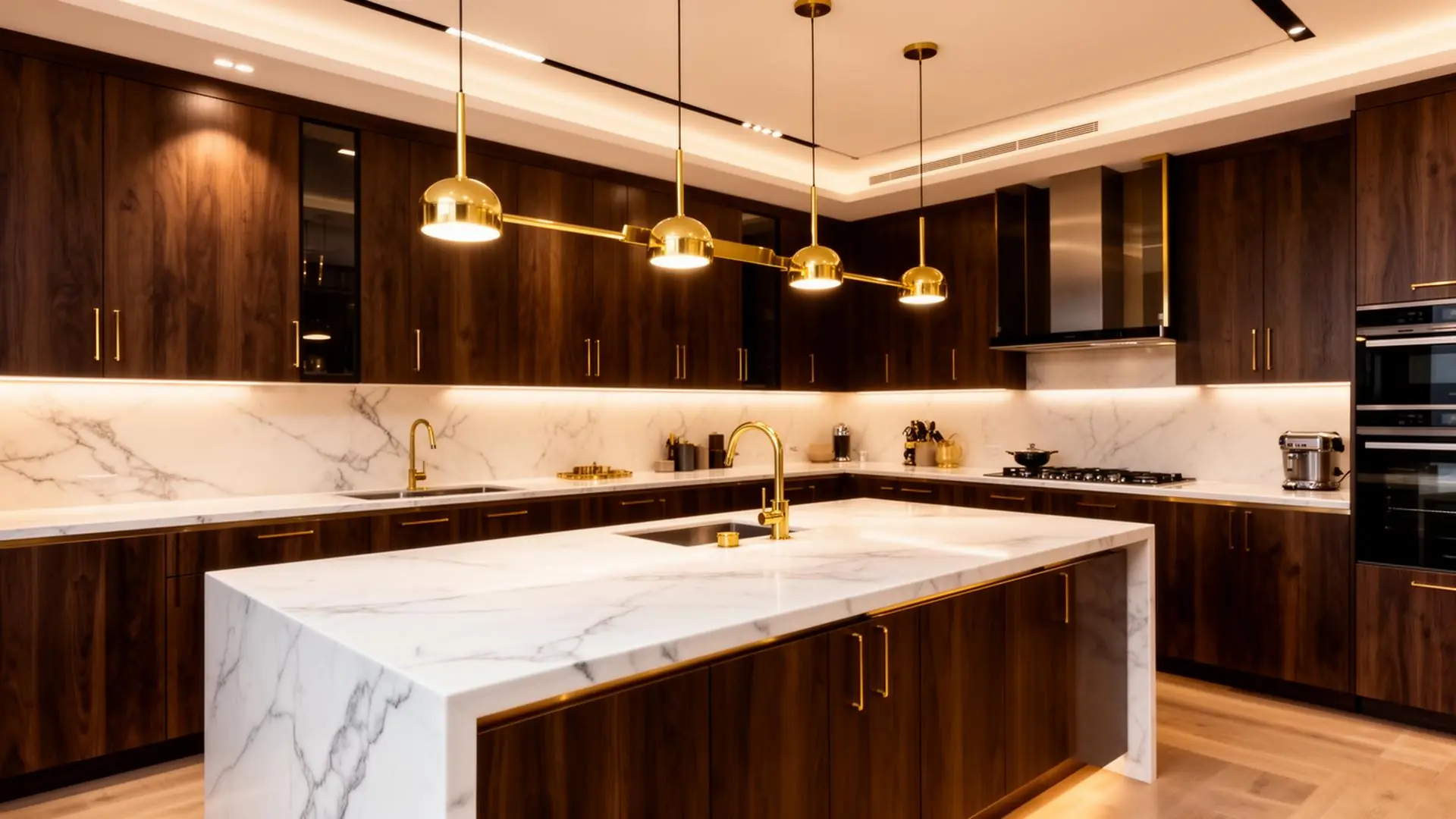
A kitchen remodel is one of the biggest investments you'll make in your home. Get it right, and you'll enjoy a beautiful, functional kitchen for decades. Get it wrong, and you'll live with the consequences every day, or pay to fix them.
After 15+ years and 200+ projects across the Capital Region, we've seen every mistake in the book. Here are the seven most common, and most costly, kitchen remodeling mistakes Albany homeowners make, and exactly how to avoid each one.
Mistake #1: Ignoring the Kitchen Work Triangle
The work triangle, the path between your sink, stove, and refrigerator, determines how your kitchen feels to use every single day. Each leg should be 4 to 9 feet, with no obstruction (island, table, or traffic path) crossing through it. A triangle that's too small makes you feel cramped. Too large, and you're walking miles during meal prep.
What to do instead: Before selecting cabinets or countertops, plan your layout around the work triangle. If you're adding an island, make sure it doesn't bisect the primary work path. A good remodeler will design the layout before discussing finishes, because no amount of premium countertop compensates for a kitchen that doesn't flow.
Mistake #2: Under-Budgeting by 20%
Most Albany homeowners underestimate their kitchen remodel cost by 15 to 25%. This leads to one of three outcomes: you run out of budget mid-project and have to compromise on finishes, the project stalls while you secure additional funding, or you go into unexpected debt. None of these are pleasant.
What to do instead: Get a detailed estimate from a reputable contractor before committing to a budget. Then add 10 to 15% contingency (15 to 20% for homes built before 1960). If the total exceeds your budget, scale the scope, don't scale the contingency. The contingency is there to protect you from surprises behind walls, and in older Albany homes, those surprises are common.
Mistake #3: Choosing Trendy Over Timeless
That bold-colored cabinet you saw on Instagram looks amazing today. In five years, it may look dated. Kitchen remodels are 15 to 20 year investments, choosing materials and colors based on current trends rather than timeless design means you'll be living with (or paying to replace) yesterday's fashion.
What to do instead: Choose timeless foundations, neutral cabinetry, classic countertop materials, and clean hardware. Express trends through easily replaceable elements: paint color, backsplash, light fixtures, and accessories. This way you can refresh the look in 5 to 7 years for a few thousand dollars instead of $50,000+.
Mistake #4: Skipping Permits
Some contractors offer to skip permits to save time and money. This is a red flag, not a favor. Unpermitted work can result in fines from the municipality, failed inspections when you sell, insurance claim denials if something goes wrong, and liability if the work doesn't meet code and causes damage or injury.
What to do instead: Any work involving plumbing, electrical, structural changes, or gas lines requires permits in Albany and throughout the Capital Region. A reputable contractor handles all permit applications and schedules all inspections. If a contractor suggests skipping permits, find a different contractor.
Avoid Costly Mistakes, Start With a Free Consultation
Jeffrey Mason will walk you through every decision, layout, budget, materials, timeline, so you avoid the mistakes that cost Albany homeowners thousands. No obligation.
Call (518) 308-6427 →Mistake #5: Buying Appliances Last
Appliances determine cabinet openings, counter depths, ventilation requirements, and utility rough-in locations. Buying appliances after cabinets are installed can result in a refrigerator that doesn't fit the opening, a range that's too deep for the counter, or a dishwasher that conflicts with an adjacent drawer.
What to do instead: Select your appliance models (or at minimum, know their exact dimensions) during the design phase, before cabinet layout is finalized. This ensures every opening is sized correctly, utilities are roughed in to the right locations, and there are no surprises on installation day.
Mistake #6: Poor Lighting Plan
A single overhead fixture is not a lighting plan. Kitchens need layered lighting: ambient (recessed ceiling lights), task (under-cabinet lights over work surfaces), and accent (pendant fixtures over islands or dining areas). Without a proper plan, you end up with shadows on your countertop, glare in your eyes, and a kitchen that feels flat and uninviting.
What to do instead: Plan your lighting layout during the design phase, not after drywall is finished. Include recessed lighting on a dimmer circuit, under-cabinet LED strips for task lighting, and pendant or decorative fixtures for visual interest. Budget $1,500 to $3,000 for a complete lighting plan, it's one of the best investments in a kitchen remodel.
Mistake #7: Hiring the Cheapest Contractor
The lowest bid is rarely the best value. Cheap bids often mean cut corners, inferior materials, uninsured workers, skipped permits, poor communication, and change orders that inflate the final price well beyond the original “savings.” In kitchen remodeling, you genuinely get what you pay for.
What to do instead: Get 2 to 3 detailed bids and compare them on an apples-to-apples basis. Look at what's included, not just the bottom line. Verify insurance. Check references from completed projects. Ensure you'll have direct access to the person managing your project. And ask about warranty coverage, a contractor who stands behind their work for 5 years has a very different incentive structure than one who disappears after final payment.
Related Articles
Frequently Asked Questions
What is the biggest mistake homeowners make during a kitchen remodel?
Under-budgeting is the most common and most damaging mistake. Most homeowners underestimate their kitchen remodel cost by 15 to 25%, leading to compromised finishes, stalled projects, or debt. Build a realistic budget with 10 to 15% contingency before starting.
What is the kitchen work triangle and why does it matter?
The work triangle connects the three most-used kitchen stations: sink, stove, and refrigerator. Each leg should be 4 to 9 feet, with no leg shorter than 4 feet. A poorly planned triangle forces you to walk unnecessarily or work in cramped conditions, every day for the life of the kitchen.
Do I need permits for a kitchen remodel in Albany?
Yes, permits are required for plumbing modifications, electrical work, structural changes, and gas line work. Skipping permits can result in fines, failed inspections at resale, and insurance issues. A reputable contractor handles all permit applications.
Should I buy appliances before or after choosing cabinets?
Select appliances before finalizing cabinet layout. Appliance dimensions determine cabinet openings, counter depths, and utility rough-in locations. Buying appliances after cabinets are installed can lead to costly modifications.
How much contingency should I budget for a kitchen remodel?
Budget 10 to 15% contingency for a kitchen remodel. In older Albany homes (pre-1960), budget 15 to 20% to account for potential plumbing, electrical, or structural issues discovered during demolition.
How do I avoid hiring the wrong kitchen remodeling contractor?
Never hire based on price alone. Verify insurance, check references from completed projects, require a detailed written contract, confirm they pull permits, and ensure you'll have direct access to the person managing your project.