
Adding a bathroom to your basement is one of the smartest home improvements you can make. A finished basement with a full or half bath dramatically increases your home's functionality and resale value. But basement bathrooms aren't like the ones on your first or second floor. They come with unique challenges: plumbing that can't rely on gravity, moisture concerns, permit requirements, and code restrictions that vary by municipality across the Capital Region.
This complete guide walks you through the plumbing reality of basement bathrooms, what permits you'll need, realistic costs, and the critical moisture-control strategies that separate successful projects from water-damaged disasters. Whether you're planning a half bath or a full master bathroom in your basement, understanding these factors upfront will save you time, money, and headaches.
Why Basement Bathrooms Are Different
Most homeowners think a bathroom is a bathroom. Install a toilet, sink, and shower, and you're done. But basement bathrooms operate under completely different constraints than above-grade bathrooms. Here's why:
Gravity-defying plumbing: A toilet on your first floor can drain downward through your main sewer or septic line using gravity alone. A toilet in the basement is often below the level of your main drain line. This creates a problem: waste water can't flow downhill to the sewer. The solution is either a lift station (also called a grinder pump or ejector pump) that mechanically pumps waste upward, or creative plumbing rerouting that may not be feasible in every situation.
Moisture is your enemy: Basements are naturally humid and prone to water intrusion. A bathroom adds showers, sinks, and water vapor to an already moisture-heavy environment. Without proper ventilation, waterproofing, and moisture control, you'll face mold, rot, and structural damage. This is especially critical in older Albany, Troy, and Saratoga Springs homes where foundations may already have moisture issues.
The Lift Station Question: Do You Need One?
The most expensive and most common issue in basement bathroom projects is the need for a lift station. Understanding whether you need one is critical for budgeting.
How lift stations work: A lift station (or ejector pump) collects waste water from your basement toilet and any other plumbing fixtures below the main sewer line. When the tank fills, a pump activates and forces the waste upward through a discharge line that connects to your main drain above the sewer line. The pump then shuts off, and the cycle repeats. This system runs quietly (most of the time) and is code-compliant throughout New York.
Do you need one? If your basement floor is below the main sewer line or septic tank outflow, you almost certainly need a lift station. Your plumber will verify this during the initial assessment. If your basement is at or above the sewer line, you may be able to run gravity-fed plumbing directly. This is a huge cost difference: gravity-fed plumbing adds $500 to $1,500 to your project. A lift station adds $3,000 to $8,000.
Basement Bathroom Costs: Full Breakdown
Here's what you can expect to spend on a basement bathroom remodel, with realistic ranges based on size and scope:
- Half bath (toilet and sink): $8,000 to $15,000, Includes lift station if needed, basic tile, and fixtures
- 3/4 bath (toilet, sink, and shower): $15,000 to $25,000, Adds shower framing, waterproofing, and tile surround
- Full bath (toilet, sink, tub/shower, double vanity): $25,000 to $45,000, Complete room with all plumbing and moisture control
- Luxury master bath in basement: $40,000 to $65,000+, Premium finishes, spa features, and high-end materials
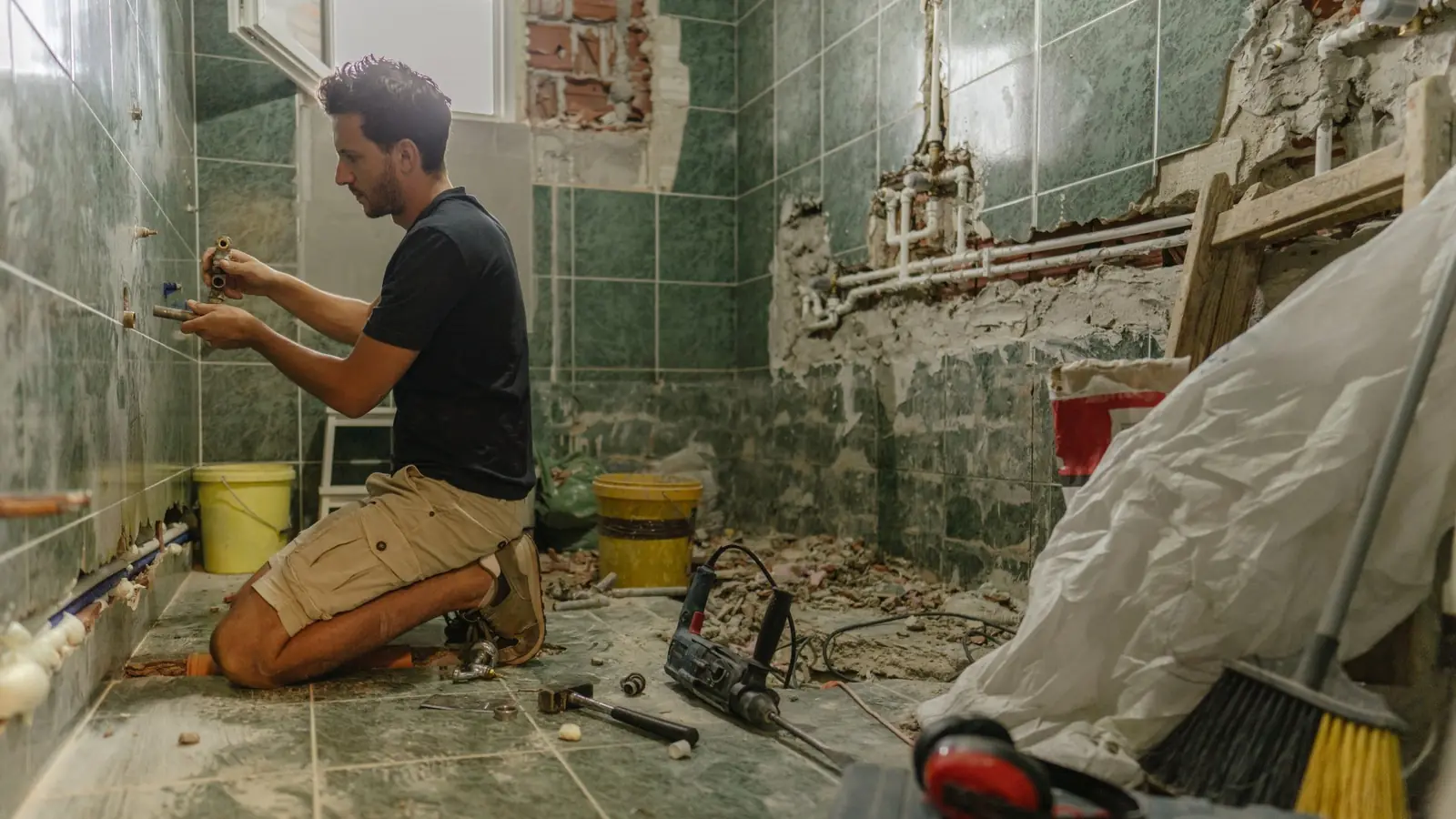
Completed basement bathroom ready for use
Breaking Down the Costs: What Goes Where
Lift Station (if required): $3,000 to $8,000
This is the biggest wild card in basement bathroom budgeting. The lift station itself costs $1,500 to $3,000. Installation labor, plumbing connections, electrical hookup, and a backup battery system add another $1,500 to $5,000. Some municipalities require a dedicated 20-amp circuit and backup power, which increases cost. Always ask your plumber to verify whether you need a lift station during the initial site visit. If you skip this step, you'll be making expensive changes mid-project.
Waterproofing and Moisture Control: $2,000 to $5,000
This is non-negotiable in a basement bathroom. Waterproof drywall (cement board or fiber-cement) costs $800 to $1,500. Sealing all seams, corners, and penetrations adds $500 to $1,000. A high-capacity exhaust fan (50+ CFM vented to exterior) costs $300 to $800 installed. Some projects require exterior waterproofing or interior drainage systems, which can add $1,500 to $3,000 to the cost.
Flooring and Tile: $2,500 to $5,000
Ceramic or porcelain tile suitable for moisture-prone environments costs $1,500 to $3,500 installed. Luxury vinyl plank (LVP) designed for bathrooms runs $1,200 to $2,500. Stone tile or custom layouts can exceed $4,000. The flooring subfloor must be properly sloped toward a drain, which adds labor but prevents standing water and mold.
Fixtures and Hardware: $1,500 to $4,000
A basic toilet, sink, and faucet run $800 to $2,000. Mid-range fixtures (double vanity, quality faucets, modern toilet) cost $2,000 to $3,500. Luxury fixtures add another $1,500 to $3,000. Choose moisture-resistant materials and finishes that won't corrode in humid conditions.
Plumbing and Electrical: $2,000 to $4,500
Running new water supply, drain lines, and electrical circuits from your main panel costs $2,000 to $4,500. If a lift station is required, add $500 to $1,500 for dedicated wiring. If you need to relocate existing basement utilities, costs can increase significantly.
Ready to Add a Basement Bathroom?
Basement bathrooms require specialized knowledge of plumbing, code compliance, and moisture control. Mastaba's team has built dozens of basement bathrooms across the Capital Region. We'll assess your plumbing situation, get permits right, and ensure your bathroom lasts decades. Call today for a detailed estimate.
Call (518) 308-6427 →Permits and Code Compliance in New York
Basement bathrooms almost always require building permits in New York. The permit process verifies that your plumbing, electrical, and structural work meet current code. This is especially important in older homes where previous work may not have been permitted.
Key code considerations: If your basement bathroom will be used as a sleeping area (bedroom with ensuite bath), New York code requires an emergency egress window. The window must be at least 5.7 square feet with a 20-inch minimum width and 24-inch minimum height. If you don't have a suitable existing window, you'll need to cut one, which adds $1,500 to $4,000 to your project cost.
Ventilation is mandatory. Your exhaust fan must be hard-wired (not switched to a light) and vented to the exterior (never into the attic). Lift stations must be installed per manufacturer specs and inspected. These code requirements exist to protect your home and family, cutting corners here is false economy.
Preventing Mold and Moisture Damage
Even with perfect planning and execution, basements are moist. The key to a long-lasting bathroom is aggressive moisture management:
- Run your exhaust fan during and for 30 minutes after every shower
- Install a separate dehumidifier in the basement (if needed)
- Ensure proper exterior grading (slope away from foundation)
- Keep gutters and downspouts clear
- Use mold-resistant paint and primer in the bathroom
- Seal all seams and penetrations where water can enter
- Fix any cracks in the foundation before the bathroom project begins
- Consider a sump pump upgrade if your basement is flood-prone
Related Articles
Frequently Asked Questions
What are the main challenges of a basement bathroom remodel?
Basement bathrooms face unique challenges including below-grade plumbing (requiring lift stations for waste), moisture and humidity control, limited natural light, building code compliance, and potential flooding concerns. Proper waterproofing, ventilation, and drainage are critical to success.
Do I need a permit for a basement bathroom remodel?
Yes. Basement bathrooms almost always require building permits in New York. Permits ensure plumbing, electrical, and structural work meets current code. In many Capital Region municipalities, basement bathrooms face stricter egress requirements if used as a sleeping area, requiring windows or secondary exits.
How much does a basement bathroom remodel cost?
A basement bathroom remodel typically costs $15,000 to $35,000. If a lift station or sump pump system is required for waste disposal, add $3,000 to $8,000. Waterproofing and moisture control add $2,000 to $5,000. Higher costs reflect the specialized plumbing and drainage systems needed below grade.
Do I need a sump pump or lift station in my basement bathroom?
A lift station (also called a grinder pump) is required when a toilet cannot drain gravity-fed to your main sewer line. If your bathroom drains are below the sewer line or septic system, you'll need a lift station. This is common in basements and adds $3,000 to $8,000 to your project cost.
What is the best flooring for a basement bathroom?
Moisture-resistant materials are essential. Ceramic tile, porcelain tile, and luxury vinyl plank (LVP) are excellent choices. Avoid wood, laminate, and standard vinyl. Proper grading, waterproofing, and ventilation are more important than material choice. Combine any flooring with a good sump pump and dehumidifier for long-term durability.
How can I prevent moisture and mold in a basement bathroom?
Install a high-capacity exhaust fan (at least 50 CFM) vented to the exterior, not the attic. Use waterproof drywall or cement board. Seal all seams and penetrations. Ensure proper site grading outside the foundation. Install a sump pump and dehumidifier. Use mold-resistant paint. Regular ventilation is critical, run fans during and 30 minutes after showering.